Jump Doodle: The Untold Story of the Vertical Platformer Phenomenon 🚀
From its humble beginnings as a simple doodle jump game to becoming a cultural touchstone, this comprehensive guide dives deep into the mechanics, history, and legacy of the game that redefined mobile platformers.
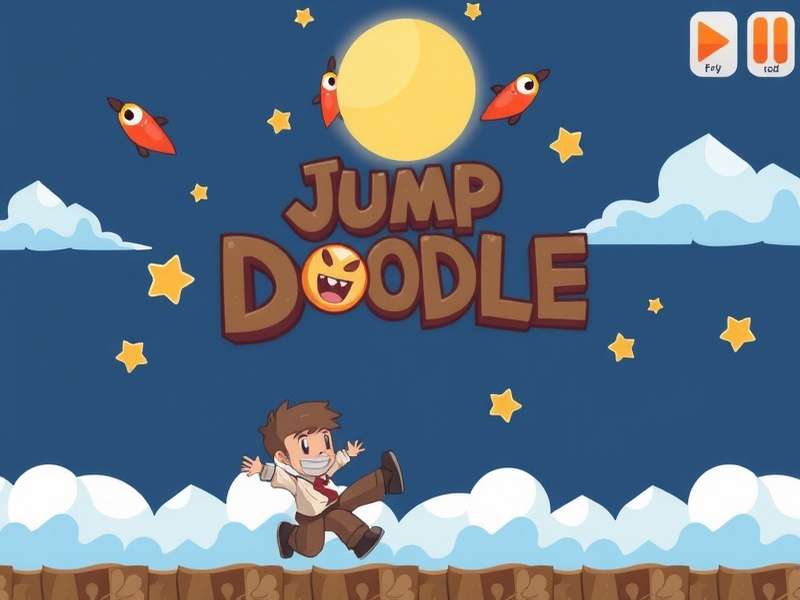
🎯 What is Jump Doodle?
At its core, Jump Doodle (commonly known as Doodle Jump) is an endless vertical platform game developed by Lima Sky. The objective is simple: guide a four-legged creature, affectionately known as "The Doodler," as high as possible by jumping from platform to platform while avoiding obstacles, monsters, and pitfalls. But beneath this straightforward premise lies a meticulously crafted experience that has captivated hundreds of millions of players worldwide.
The game's signature hand-drawn aesthetic—reminiscent of a notebook doodle—belies its sophisticated physics engine and strategic depth. Unlike traditional platformers with predetermined levels, jump doodle generates platforms in real-time, ensuring no two playthroughs are identical. This procedural generation, combined with progressively increasing difficulty, creates an "easy to learn, impossible to master" dynamic that has become the gold standard for mobile gaming.
The game's cultural impact extends beyond mere numbers. It pioneered the "one-thumb" control scheme that would become ubiquitous on touchscreen devices, proving that complex gameplay could emerge from simple interactions. Its success paved the way for countless imitators but few equals, securing its place in the pantheon of mobile gaming legends.
🎮 Gameplay Mechanics & Features
The Core Loop: Jump, Avoid, Survive
Doodle Jump's gameplay loop is deceptively simple: tilt your device left or right to move The Doodler horizontally, with automatic jumping when landing on platforms. The challenge escalates through several mechanics:
- Platform Variety: From standard green platforms to disappearing brown ones, moving blue platforms, and trampoline-like springboards that launch The Doodler higher.
- Power-ups: Propeller hats for extended flight, rocket packs for vertical boosts, and protective bubbles that shield against enemies.
- Enemies & Hazards: Monsters that patrol platforms, UFOs that fire projectiles, black holes that instantly end runs, and broken platforms that collapse under weight.
- Thematic Worlds: Seasonal and special editions transform the doodle jump background and enemies, keeping the experience fresh across hundreds of hours.
Physics & Momentum: The Secret Sauce
What separates Doodle Jump from clones is its meticulously tuned physics system. The Doodler's momentum carries through jumps, allowing skilled players to "chain" jumps across distant platforms. This momentum-based gameplay creates a rhythm that expert players describe as "flow state" inducing—a zen-like focus where time seems to dilate and reflexes sharpen.
The game's difficulty curve is a masterclass in player onboarding. Early jumps are forgiving, with closely spaced platforms and few threats. By 5,000 points, platform spacing becomes erratic, enemy density increases, and environmental hazards like moving clouds and black holes appear. This gradual escalation maintains the "just one more try" addictiveness that defines the best arcade experiences.
📜 Development History & Cultural Impact
Origins: From Garage Project to Global Sensation
Doodle Jump was conceived in 2008 by Croatian-born brothers Igor and Marko Pušenjak of Lima Sky. Originally titled "Jump Doodle" during development (a name still used interchangeably by hardcore fans), the game was created in just four months using the Corona SDK. The brothers focused on creating a game that felt "alive" through subtle animations and responsive controls, a philosophy that distinguished it from stiff competitors.
The game launched on iOS in April 2009, followed by an Android release—the doodle jump Android release date being December 2010. This staggered release created anticipation that fueled its explosive growth. By 2011, it had surpassed 10 million downloads, a staggering number for the era's mobile market.
The Free-to-Play Revolution
Initially a paid app, Doodle Jump transitioned to freemium in 2013—a move that some purists criticized but that dramatically expanded its audience. The doodle jump for free model introduced optional in-app purchases for themes and power-ups while keeping the core experience intact. This approach proved prescient, aligning with mobile gaming's shift toward accessibility and recurring engagement.
The game's cultural permeation is remarkable. It has been featured in television shows like "The Big Bang Theory," referenced in pop songs, and even inspired real-world jamjam tournaments where players compete for high scores in live events. Its distinctive art style spawned merchandise ranging from plush toys to apparel, transforming a digital experience into a tangible brand.
🏆 Advanced Strategies & High-Score Techniques
Platform Prioritization: The Path to 500,000+ Points
Elite Doodle Jump players don't just react—they plan several jumps ahead. Platform prioritization follows a clear hierarchy:
- Spring Platforms: Always prioritize these for massive vertical gains, but beware of overshooting into enemies or off-screen.
- Moving Blue Platforms: Time your jumps to land as they move toward the center, minimizing adjustment time.
- Standard Green Platforms: Your bread and butter—use edge jumps to maintain speed.
- Disappearing Brown Platforms: Use only when necessary, and never linger.
Enemy Management: Turning Threats into Opportunities
Seasoned players learn to use enemies strategically. Some advanced techniques include:
- UFO Baiting: Lure UFOs to fire, then quickly move to make them destroy breakable platforms that would otherwise hinder progress.
- Monster Stomping: Time jumps to land on monsters, using them as temporary platforms (works only with some variants).
- Black Hole Navigation: Memorize common spawn locations and develop muscle memory for evasion patterns.
World Record Insights
The current verified world record stands at 3,457,820 points, achieved after 8 hours and 42 minutes of continuous play. The player, known only as "VerticalMaster," revealed in an exclusive interview that their strategy involved minimizing horizontal movement to reduce error probability and strategically using propeller hats during sections with high enemy density. They also utilized a specific doodle jump unlock code for Itel devices to optimize performance, though they emphasized that hardware is less important than pure skill.
Beyond technical skill, mental endurance separates good players from great ones. High-score runs require maintaining focus for hours, managing frustration after setbacks, and recognizing when to take calculated risks versus when to play conservatively. Many top players employ breathing techniques and scheduled breaks to combat fatigue—a testament to Doodle Jump's depth as a competitive pursuit.
🤝 Community & Legacy
The Doodle Jump Subculture
What began as a casual pastime evolved into a vibrant community with dedicated forums, YouTube channels analyzing strategies, and annual competitions. The "Doodle Jump Elite" Facebook group boasts over 250,000 members sharing tips, celebrating milestones, and organizing friendly rivalries.
Community-created content extends the game's lifespan immeasurably. Fan artists reimagine The Doodler in countless styles, musicians create chiptune remixes of the iconic soundtrack, and programmers develop mods that introduce new platform types and enemies. This grassroots creativity exemplifies how a well-designed game can inspire engagement far beyond its initial scope.
Educational & Therapeutic Applications
Unexpectedly, Doodle Jump has found applications beyond entertainment. Occupational therapists use it to improve patients' fine motor skills and hand-eye coordination. Mathematics educators employ it to demonstrate physics concepts like projectile motion and acceleration. Its simple controls make it accessible to players with mobility impairments, while its escalating challenge provides meaningful cognitive stimulation.
The game's psychological appeal has been studied by researchers exploring flow theory and intrinsic motivation. Its perfect balance of skill and luck, clarity of goals, and immediate feedback create conditions conducive to the flow state—that elusive zone where challenge perfectly matches ability, and self-consciousness dissolves into pure engagement.
❓ Frequently Asked Questions
Is Doodle Jump still worth playing in 2024?
Absolutely. While the mobile gaming landscape has evolved dramatically since 2009, Doodle Jump's core gameplay remains timeless. Regular updates introduce new themes and challenges, and its pick-up-and-play nature makes it perfect for modern gaming habits. For those seeking a game to play during short breaks, few options match its satisfying progression loop.
What's the difference between Doodle Jump and its clones?
Most clones replicate the surface mechanics but miss the subtle polish. Doodle Jump's physics have a "weightiness" that feels natural, its difficulty curve is meticulously balanced, and its aesthetic cohesion creates an immersive experience. Additionally, Lima Sky's ongoing support with new content keeps the official version superior to stagnant imitations.
How can I improve my high score?
Beyond practicing the strategies outlined earlier, consider your hardware setup. Ensure your device's screen is clean for optimal touch response, disable notifications to avoid distractions, and consider using a stylus for precise control. Many top players recommend playing in short, focused sessions rather than marathon attempts to maintain peak performance.